

Honey Bee Life Simulator 3D
Games Astra
Honey Bee Life Simulator 3D puts me in the role of a honey bee rather than a traditional action-game hero. That simple change gives the adventure a calmer, more curious feel: I explore a hive, look for nectar, and gradually contribute to the colony. It is the kind of game I would recommend to someone who enjoys light simulation and exploration more than constant combat or complicated missions.
Developed by Games Astra, this free adventure game is aimed at Everyone and runs on Android devices using version 7.0 or later. The current release is 0.7, so I approach it as a game that is still fairly early in its development rather than as a huge, fully mature simulation. Its audience is already sizeable, with over 100 thousand installs, but the experience remains more focused than the large farming, survival, or open-world games it may initially resemble.
What to expect when you enter the hive
The central appeal is the change of scale. Ordinary surroundings become a space for a tiny flying creature, while the hive acts as both a home base and a reason to keep exploring. I spend time moving through the environment, gathering nectar, and thinking about how each trip supports the colony. That loop is easy to understand, which makes the game approachable even if you have never played a simulator before.
I would not install this expecting a detailed scientific model of bee biology. The experience is better understood as a casual 3D adventure with a bee theme. The fantasy is about feeling useful inside a living colony, not about studying every real-world behavior of insects. That distinction matters because players looking for authentic educational content may prefer a dedicated nature app, while players wanting a gentle game with a clear identity will probably feel more at home here.
The first few minutes are best approached without rushing. Instead of treating every movement as part of a race, I pay attention to the relationship between the hive and the outside area. Returning to the colony is not merely backtracking; it gives the collecting activity a purpose. The most satisfying part of the opening is seeing exploration become a contribution rather than a series of disconnected pickups.
Related News






The game also suits short sessions. I can open it when I have a little free time, make progress through a small collecting trip, and stop without needing to remember a complicated plot. That makes it a practical choice for younger players and for adults who want something less demanding than a long campaign. The Everyone rating reflects that accessible presentation, although younger children may still benefit from an adult explaining any purchase prompts that appear during play.
There is a useful trade-off here. A simple premise makes the game welcoming, but it can also feel limited if I want deep strategy, extensive character development, or a large variety of objectives. The pleasure comes from the theme and the repeated rhythm of flying, collecting, and helping the hive. If that rhythm sounds relaxing, the game has a clear reason to try it. If you need constant surprises, it may not hold your attention for long sessions.
Starting without overthinking the controls
On a first launch, I suggest taking a quiet minute to understand movement before concentrating on resources. In a 3D environment, it is easy to focus on the nectar objective and then lose track of where the hive is. I find it more comfortable to establish a mental route first: identify the colony, notice the direction of the surrounding area, and then make a short outward trip rather than flying as far as possible immediately.
Gallery
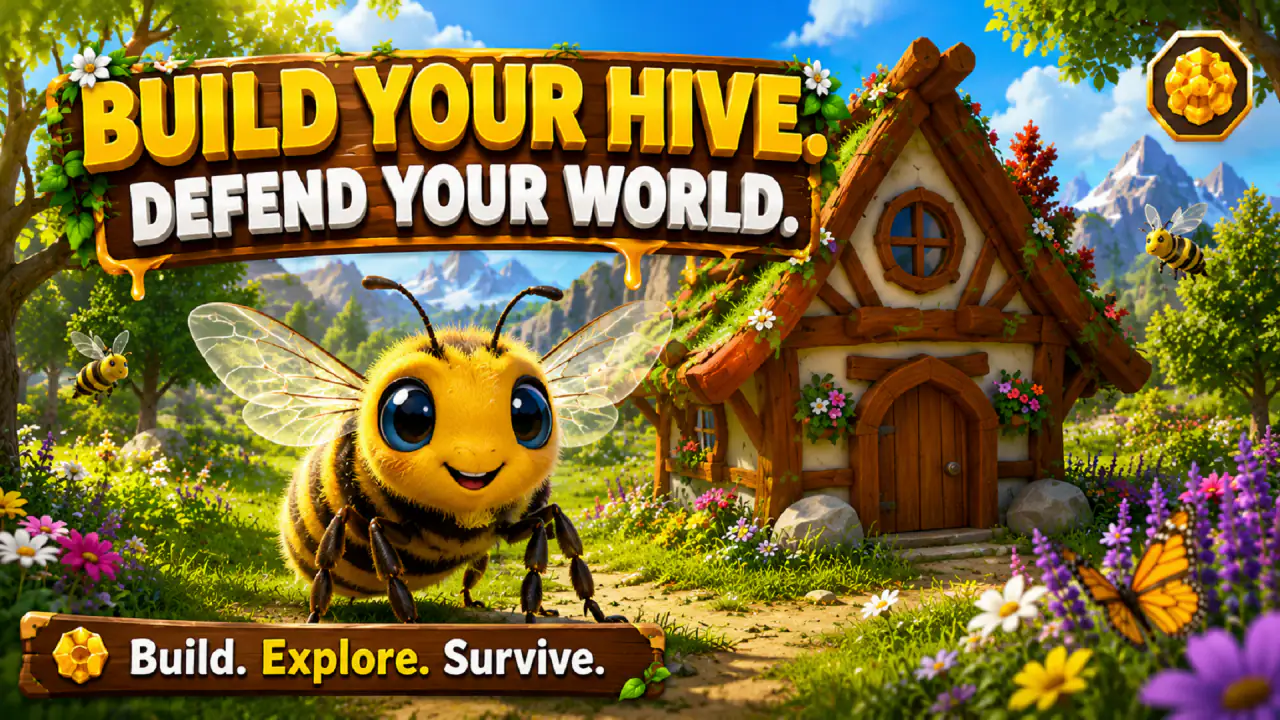
This approach prevents a common beginner mistake: turning the first collection attempt into an unnecessarily long journey. A short route lets me learn how the bee responds, how the camera presents nearby objects, and how returning to the hive feels. It also gives me a clear fallback point if I become disoriented. The game’s simple concept does not remove the need for orientation, especially when the scenery starts to look similar.
I also recommend using the first session to test how the game feels on your particular phone. The minimum operating-system requirement is Android 7.0, but compatible software does not guarantee that every device will feel equally comfortable. Screen size, touch response, and the way the phone handles 3D scenes can all affect the experience. If movement feels awkward, shorter play sessions and slower turns are more helpful than trying to fly quickly through the environment.
Because the game is free, it is easy to try without making an immediate commitment. Still, free access does not mean every part of the experience is necessarily outside the purchase system. Optional in-app items are listed in the range of $14.99 to $19.99 per item. I would personally play the opening first, decide whether the collecting loop is enjoyable, and only then consider whether any paid option has real value for me.
That is especially important for families. The age rating is Everyone, but the presence of in-app purchases means a parent should make sure the device’s purchase settings match the child’s age and the family’s expectations. The game itself can be friendly and approachable while the payment decision still deserves adult attention. I see this as a practical part of setup, not a reason to dismiss the game.
The first meaningful success
The first real milestone is not simply finding nectar. It is completing the whole loop: leave the hive, locate a collection opportunity, gather what you need, and return with a clear sense that the trip helped the colony. I recommend making this the goal of the opening session. It gives the game structure without forcing a complicated checklist onto a new player.
My preferred beginner workflow is deliberately conservative. I start close to the hive, collect a manageable amount, and turn back before the journey becomes confusing. Once I know the route, I repeat it with more confidence. This is more effective than wandering widely because it teaches both sides of the game: the freedom of exploration and the responsibility of bringing resources back home.
One small but valuable habit is to pause mentally after each successful return. I ask myself what made the trip easy or difficult: Was the destination obvious? Did I recognize the way back? Did I spend too much time moving without a clear purpose? Those questions turn a basic activity into a learning process. They are also useful for players who find 3D navigation harder than the collecting itself.
For a child, this first success can be framed as a simple story: the bee went out, found something useful, and came home to help everyone. For an adult, it is a compact resource loop that can be enjoyed without a large time investment. The same action works for both audiences because the game keeps the objective understandable.
What I would not do is judge the entire game before completing that return journey. The store summary emphasizes hive exploration, nectar, and colony building, but those ideas make more sense once I experience the connection between them. Picking up an item in isolation feels ordinary. Bringing it back to the hive gives the action context and reveals whether the game’s pace suits me.
Where new players can become confused
The most likely confusion comes from treating the environment like a conventional open-world game. I may assume that every visible direction contains a major mission or that I should explore as far as possible immediately. In this game, a more useful question is whether the trip has a purpose. If I am flying simply because the area is open, I may be missing the central rhythm of collecting and returning.
Another possible stumbling block is losing the hive after a long outward journey. My solution is simple: make the first routes short and use recognizable landmarks whenever the environment provides them. I also avoid changing direction repeatedly when I am unsure. A calm, deliberate route is easier to reconstruct than a series of quick turns made while searching.
Players may also wonder how much realism to expect from the bee role. The game’s theme gives the adventure its personality, but I would not use it as a replacement for a factual lesson about pollination, hive organization, or insect behavior. It works best as imaginative play. That makes it a good fit for someone who wants to feel like a bee, but a weaker choice for someone whose main goal is structured learning.
The current version, 0.7, is another reason to keep expectations measured. I see that version number as a reminder that the game may feel more compact than established simulation titles. A smaller feature set is not automatically a problem; it can make the first steps easier. However, players who expect a deep progression system, a large number of activities, or the polish of a long-running blockbuster should consider that difference before installing.
There is also a difference between casual progression and management-heavy colony games. Here, the bee perspective and direct exploration are the main attraction. In a farming or strategy alternative, I might spend more time arranging production, balancing several resources, or planning long-term upgrades. Those games offer more control, but they also demand more attention. This title is preferable when I want to participate in the colony through simple actions rather than manage it like a spreadsheet.
How it compares with familiar alternatives
Compared with survival games, Honey Bee Life Simulator 3D feels less intimidating. I am not looking for a character’s shelter, fighting enemies, or juggling a large collection of survival needs. That makes it easier to recommend to someone who likes exploration but dislikes pressure. The trade-off is that it does not provide the same tension or sense of danger that makes survival games exciting.
Compared with farming simulators, the bee game is more focused on movement and discovery. A farming game usually gives me a broad routine involving planting, waiting, harvesting, and improving land. Here, the identity is much narrower: I am a small creature operating within the hive’s world. That focus is refreshing, although players who enjoy decorating, trading, or building a large personal property may find a farming alternative more rewarding.
It also differs from educational insect apps. Those products may explain anatomy or real behavior more directly, while this one asks me to learn through play. I would choose the game for imaginative involvement and choose an educational app when accuracy and structured information matter more than exploration. Neither approach is automatically better; they serve different reasons for opening the phone.
For younger players, the game’s clear premise may be easier to understand than a complex adventure with several characters and menus. For older players, the appeal depends on whether the bee viewpoint feels novel enough to carry the experience. I enjoy that unusual perspective, but I can also see myself moving on if I need a stronger narrative or more demanding objectives.
Making the next step worthwhile
After completing the first successful collection trip, I would not immediately try to cover the entire map or chase every possible activity. I would repeat the route once, then extend it gradually. This creates a useful progression in my own skill: first I learn the hive, then I learn the nearby environment, and only afterward do I test longer exploration. That method keeps the game reassuring instead of turning it into a navigation puzzle.
A second helpful habit is to separate exploration sessions from goal-focused sessions. When I want relaxation, I can simply observe the surroundings and become familiar with the bee’s scale. When I want measurable progress, I leave with a specific intention to collect and return. Mixing both styles is possible, but separating them makes the game’s pace easier to control.
I would also keep the purchase system in the background during the early hours. The free entry point is enough to decide whether the core activity works for me. Since individual in-app items can cost between $14.99 and $19.99, I would not buy anything just to solve beginner uncertainty. First I would learn the movement, understand the collecting loop, and decide whether I am still enjoying the game after the novelty of being a bee has settled.
For someone choosing a game for a child, I would install it together, complete the first route together, and explain that the colony is the destination rather than an obstacle to leave behind. That small introduction can prevent most early frustration. It also turns the game into a shared conversation about exploration, responsibility, and how a small action can support a larger group.
For a casual adult player, I would suggest using it as a short reset between more demanding activities. The game’s strongest use case is not replacing a major adventure game; it is offering a lighter alternative when I want a clear task and a distinctive setting. If I am tired of combat, timers, and complex menus, the bee theme provides a welcome change of pace.
On the other hand, I would skip it if my priority is deep colony management, a substantial story, competitive play, or a highly realistic nature simulation. Those expectations point toward other genres. The game’s value comes from its accessible bee fantasy and uncomplicated collecting loop, not from trying to cover every kind of simulator feature at once.
My recommendation after settling into the routine
Honey Bee Life Simulator 3D is an appealing choice for first-time players who want a gentle adventure built around a memorable idea. I like that the route from installation to progress is easy to understand: learn the movement, leave the hive, gather nectar, and return to support the colony. That structure gives beginners a concrete first goal without burying them in instructions.
Its limitations are just as clear. The experience may feel too light for players who need constant variety, and the early version means I approach it with more modest expectations than I would bring to a large established title. The in-app purchase range also makes it sensible to test the free experience carefully before spending anything.
My final advice is to give it a focused first session rather than a rushed glance. Stay near the hive, complete one full collecting journey, and decide whether the movement and atmosphere feel enjoyable. If that small success makes you curious about going farther, the game has probably found its audience in you. If it feels repetitive before the colony connection becomes meaningful, a deeper farming, survival, or strategy alternative will likely be a better match.
For me, Honey Bee Life Simulator 3D works best as a friendly, low-pressure adventure that turns an ordinary resource loop into a bee-sized story. Games Astra has chosen a theme that is easy to understand and different from the usual hero-centered formula. I would recommend trying it to anyone who wants a simple way to explore, collect, and feel useful inside a hive, provided they are comfortable with a focused experience rather than a sprawling simulation.
FAQs for Honey Bee Life Simulator 3D
What is Honey Bee Life Simulator 3D about?
Honey Bee Life Simulator 3D is a casual simulation game that lets you experience the daily life of a honey bee. You explore colorful environments, collect nectar, help build and maintain the hive, and complete tasks connected with survival and colony growth. The game combines simple objectives, light exploration, and accessible controls, making it suitable for players who enjoy relaxed animal and nature-themed simulators.
How do you play Honey Bee Life Simulator 3D?
Gameplay generally revolves around guiding your bee through different areas, searching for flowers, collecting resources, and returning them to the hive. Depending on the mission, you may also need to avoid dangers, follow time limits, or complete specific collection goals. The controls are designed to be straightforward, usually using touch-based movement or virtual controls, so new players can learn the basics quickly.
Is Honey Bee Life Simulator 3D free to download and play?
The game can typically be downloaded without an upfront purchase, although availability and pricing may depend on whether you are using Android or iOS. Free versions may include advertisements, optional purchases, or limitations on certain content. Before installing, it is worth checking the store listing for the current monetization model, supported devices, in-app purchase details, and any requirements that could affect your experience.
Does Honey Bee Life Simulator 3D require an internet connection?
Many of the game’s basic activities may be playable offline after the application has been installed, which is convenient when you are traveling or have limited connectivity. However, an internet connection may still be needed for advertisements, updates, cloud-related features, or restoring purchases. Because requirements can change between versions, check the official store description and test the game once before relying on it offline.
Is Honey Bee Life Simulator 3D suitable for children?
Honey Bee Life Simulator 3D is generally presented as a light, non-violent simulation experience and may appeal to children who enjoy animals, collecting, and simple exploration. Nevertheless, parents should review the age rating, advertising content, privacy information, and available in-app purchases before allowing unsupervised play. Younger children may also need help with controls, objectives, or avoiding accidental purchases on a shared device.
Pros
- Simple controls make it easy for casual players to start quickly.
- Bright 3D environments create a cheerful
- family-friendly atmosphere.
- Short tasks suit players looking for quick gaming sessions.
- Bee-themed gameplay offers a light educational introduction to hive life.
- Offline play is convenient when you have no internet connection.
Cons
- Gameplay can become repetitive after completing the same collection tasks.
- The camera may feel awkward in narrow areas or during fast movement.
- Graphics and animations are fairly basic compared with newer simulators.
- Some upgrades may require considerable grinding to unlock.
- Ads can interrupt play and reduce the overall immersion.


